

















Introduction
A finance manager approves a payment request from a voice that sounds exactly like her boss, same tone, same urgency, same background noise. Two hours later, the real director walks past her desk. This isn’t a hypothetical anymore; deepfake-enabled voice fraud is happening right now. As generative AI blurs the line between real and fake, traditional awareness training is no longer enough. Here’s why, and what security teams must do instead.
Key Takeaways
- Deepfakes exploit human perception, not awareness, making traditional “human firewall” training ineffective against voice and video manipulation.
- Even trained security professionals identify realistic deepfakes correctly less than 25% of the time.
- AI-powered, multimodal verification, analyzing audio, video, and behavioral signals, is now outperforming manual detection by 30%.
- Behavioral biometrics, liveness detection, and cross-channel verification form the foundation of next-generation deepfake defense.
- Regulators including ENISA, FinCEN, and the EU AI Act now expect layered technical verification, not just employee awareness programs.
Why Security Training Alone Can’t Stop Deepfake Fraud
A finance manager answers on the third ring. The voice is unmistakable, same hoarseness after back-to-backs, same clipped urgency. An “urgent vendor payment” needs approval before EOD. She’s worked with him for four years. She knows his patterns.
She processes the transfer. Two hours later, the real director walks by her desk.
This scenario isn’t far-fetched. It’s today. And according to multiple industry surveys, nearly 1 in 3 organizations have already encountered similar attacks. Deepfakes aren’t emerging; they’re operating against you now.
When Your Eyes and Ears Become Liabilities
We’ve spent years building the human firewall, phishing drills, URL checks, caller-ID hygiene. Those were designed for attention attacks (typos, spoofed links, odd numbers).
Deepfakes don’t attack attention. They attack perception.
- Even trained security pros identify realistic deepfakes <25% of the time without warning.
- Under time pressure, with a voice that matches timbre, cadence, and familiar background noise, the brain optimizes for efficiency, not skepticism.
- That’s not a training failure, it’s human nature meeting tech designed to exploit it.
The Problem With “Just Be More Careful”
- Cognitive overload: Employees already juggle legit urgency. Adding “assume anyone might be synthetic” turns security into paralysis.
- Biology vs. math: Humans can’t perceive microsecond audio artifacts or frame-level lip-sync drift. Machines can.
- Speed of change: Your annual training cycles can’t keep pace with monthly model upgrades. The gap widens every week.
Conclusion: Better posters and longer trainings won’t fix a problem rooted in human perception limits.
What Actually Works: Verify Before You Trust
The future of security isn’t vigilance, it’s verification.
1) Let AI Fight AI (Multimodal Detection)
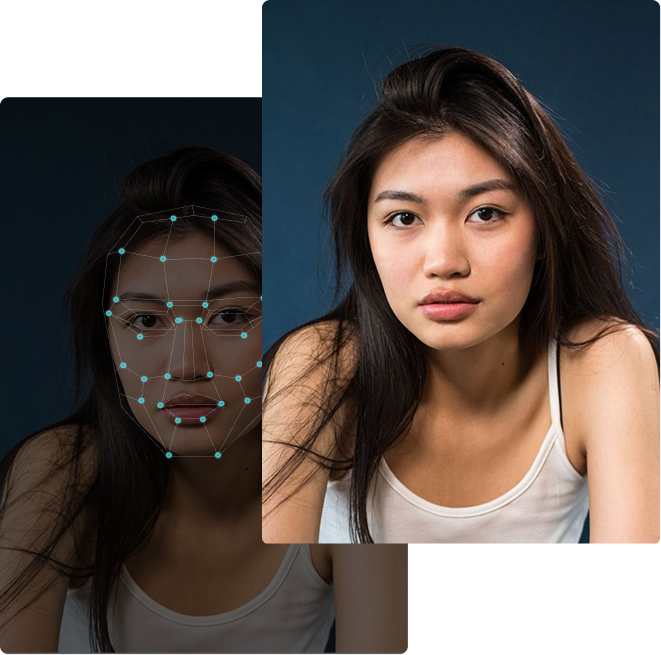
Analyze audio + video + behavioral signals together: frequency anomalies, micro-expressions out of sync with speech, lighting/geometry mismatches, device/OS artifacts.
Multimodal systems outperform single-channel detection by wide margins because they model what “real” looks like, not just “what’s wrong.”
2) Prove Presence (Modern Liveness)
Beyond “blink twice.” Use 3D depth, texture analysis, and micro-movement tracking that current generators can’t reliably fake. This is the baseline for remote identity verification.
3) Use Behavioral Biometrics (Silent, Continuous)
Typing cadence, cursor dynamics, mobile posture, stable patterns that are hard to imitate and frictionless for users. Already deployed by leading banks for continuous authentication.
4) Build in Smart Friction (Only When It Matters)
For high-stakes actions: switch channels, add callbacks, require in-person verification, or enforce short time delays. Strategic friction beats catastrophic loss.
5) Humans + Machines (The Real Firewall)
AI flags and explains; humans apply business context. Organizations that combine both detect faster and reduce false positives, if the AI is explainable.
Explainability Turns Alerts Into Action
“Looks weird” doesn’t build trust. Reasons do.
Your teams need outputs like:
- “Audio formant distribution deviates from speaker’s historical profile; 0.3s lip-sync delay between 21 to 29s; lighting normals inconsistent across left cheek.”
Explainability: - Accelerates response (analysts know where to look)
- Reduces false positives (tune the right thresholds)
- Meets audit needs (clear decision records)
Regulators Are Raising the Bar
- EU AI Act: Disclosure, auditability, and accountability for AI, with heightened expectations for deepfakes.
- DORA / NIS2 / ENISA guidance: Treat AI-driven threats as operational resilience requirements.
- FinCEN: Emphasizes multi-layer verification for financial communications.
“We trained employees to be careful” is no longer an acceptable posture. Layered technical controls and explainability are becoming obligatory.
The Question Isn’t If, It’s When
Your people are diligent. But when an attacker can reproduce your CFO’s voice, mannerisms, and office ambiance, diligence alone won’t stop loss. The human firewall didn’t fail, the threat evolved past human perception.
Winning organizations are shifting from awareness to assurance: systems that prove truth before trust.
In a world where anyone can sound like your CEO, the right question isn’t “Can employees spot a fake?”
It’s “Can your systems verify the truth?”
How DuckDuckGoose AI Helps
Explainable deepfake detection, embedded where it matters: KYC, AML, onboarding, payment approvals, and comms verification.
- Real-time, multimodal detection across audio, video, and documents
- Transparent outputs (where, what, how confident) your analysts can act on
- Compliance-aligned with EU AI Act, NIST AI RMF, and sector guidance
- Seamless integration, no re-architecture; adds smart friction only at critical moments
- Protects brand integrity by ensuring only authentic content reaches stakeholders
Move beyond awareness to assurance that can’t be faked.
.webp)
About the author